All posts by Hearts & Homes for Youth

Celebrating our social workers

photo 1March is Social Work Month and this March we had a great time celebrating the social workers at Hearts & Homes who make a difference every day for the youth in our care! The theme this year, “Social Work Paves the Way for Change” spoke directly to our social workers’ mission. Hearts & Homes for Youth’s social workers are part of the change process that each youth experiences when they join the Heats and Homes family.

photo 3Our social workers effect change through empowerment: empowering each youth to see the good in themselves and to act on the belief that they can reach their goals.  They effect change through dedication: sticking with even the most difficult youth and showing them something different than what they are accustomed to.  They effect change through education: utilizing all of their training to provide services that reflect best practices for great outcomes. Change may be a youth smiling or laughing more, finally feeling at home and comfortable to be themselves or a youth graduating high school who was previously failing classes and on the verge of dropping out.  Our social workers are tirelessly dedicated to helping our youth identify and develop the academic, vocational, behavioral, and other tools to become independent and productive young adults.

photo 4Our social workers work in our group homes, with foster parents, and with our parenting teens in Damamli Independent Living Program providing therapy, psycho-education, training, case management, and ensuring that each youth feels like a part of our family.

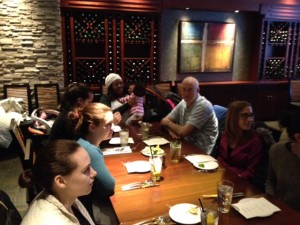
As a way to say thank you to our social workers, Hearts & Homes hosted a luncheon at Seasons 52 in Columbia. Each social worker received a card and personal token of appreciation.

Our appreciation goes beyond the month of March;, we appreciate our social workers each and every day for the contribution that they make to each youth and to Hearts & Homes as a whole.

Girls on the Green 2015 Vendors!

Check out some of the vendors that will be showcasing their products at Girls on the Green!

Cathy Lerario will be at Girls on the Green with handmade sea glass beach jewelry and beach home decor! Check out her products on Facebook at Seaglass, Silver and Shells!

home_hero_march_lgJessica Durning will be coming from Younique Products with cutting-edge cosmetics! The products contain high quality ingredients that enrich and nourish the skin. The cosmetics are safely compatible with virtually every skin type. Younique Products’ goal is to provide healthy, clean, and pure cosmetics.

imgresJennifer Kramer will be coming with her products from Thirty One Gifts! Whether you’re looking for style, organization, the perfect giftable item – or a little bit of everything – Thirty-One’s has you covered on trendy and affordable purses, totes, and bags. Just over 10 years ago, Thirty-One was formed with a simple goal of helping women by giving them an opportunity to own their own business.

Morgan Reem will be showcasing Unique Boh’tique clothing from LuLaRoe and a variety of adjustable, non-slip headbands in a variety of colors from Owl Be Sweatin! We can’t wait to see the products at this pop-up boutique!

Julie Snight is bringing a Southern Maryland traveling fashion boutique to Girls on the Green! Click here to check out Explore Couture!

article-915890-1424704406Dianne Brickman will be showcasing the stylish, fun products from The Shine Collection! Launched in 2013, The Shine Collection is a line of resort and lounge-wear made from hand block printed fabrics imported from India. The epitome of effortless chic, Shine features universally flattering styles for sunny days and starry nights. The Shine Collection, based in Bethesda, feels a strong commitment to giving back to the community! Check out her website to start picking out what you’ll buy when you see her at Girls on the Green!

11046306_10153157688002112_5920505763911407845_nLatecea Brock from It Works! will be a vendor at the Girls on the Green Golf Tournament this June! The staple product of It Works! is the body wrap, which tightens tones, firms and reduces the appearance of cellulite. It Works! also has a skin care line and a wellness line that includes various types of supplements. To top it all off, Latecea is a newly licensed Zumba instructor! Click here to check out her products!

Alex and Debbie Schmidt will be representing Arbonne at the 4th Annual Golf Tournament. Arbonne is a Vegan, Gluten-Free, and Non-GMO health and wellness company that represents beauty from the inside out! Anti-aging is a synergistic approach to what you put on and in your body which includes skincare and nutrition. We have pure, safe, and beneficial products for the entire family. There will be a Free Product drawing and homemade protein bar tasting. Check out Arbonne products here!

Contact Caitlin Buckley at cbuckley@heartsandhomes.org if you would like to showcase your products at our event!

“Game Changer” Conference

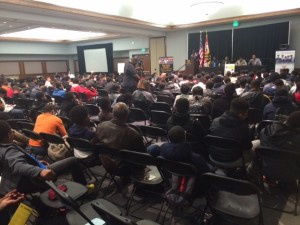
IMG_4951On Saturday, March 28, 2015 the Unity Christian Fellowship, Inc. Youth Development Organization, in partnership with Montgomery College, Mu Nu Chapter of the Omega Psi Phi Fraternity, Inc., and Partnerships for Inter-faith and Community hosted the annual one-day “Game Changer” Conference for Young Males at the Universities at Shady Grove Conference Center in Rockville. The conference included Elementary, Middle School, and High School-age students in Montgomery County and nearby communities.

The mission of the conference was to positively impact young males through “game changing” experiences that promote confidence, competencies and values they need to get to the next level and become a success story. The conference hosts want our young people to live up to the highest possibility of their potential, resulting in High School and College graduation.

Click here to see a video about the conference

IMG_4952The objective of the conference geared toward Black and Hispanic young males was to show the young males that they are valued and that the community cares about them doing the work required to succeed. The aim was to raise awareness and promote student success among male students by providing strategies to win with academics and athletics.

The conference is one of many youth development programs offered by the Mu Nu Chapter of the Omega Psi Phi Fraternity, Inc. and Unity Christian Fellowship Youth Organization. For additional information on UCF Youth Development planned activities throughout the year contact Donald Williams at any time at (301) 641-7261) aimhighinlife@aol.com and visit Unity Christian Fellowship Youth Organization.

The House That People Built

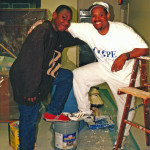
RexIn March 1969 Rex Smith, one of the original founders of Hearts & Homes for Youth, prepared a report called “The House That People Built: Anatomy of a Group Home in Suburbia.” The subject of the report was the Boys’ Home of Montgomery County, which is now known as Hearts & Homes for Youth.

In the report, a younger Rex describes Hearts & Homes for Youth’s (formerly named the Boys’ Home of Montgomery County) history, founding concept, and the anatomy of the program. It is heartwarming to read. Many of his words still ring true, such as his note in the Acknowledgements: “We appreciate very much the interest and enthusiasm of the local community without whose support as individuals, groups, and corporate citizens, there would be no home and no report.”

We have begun publishing excerpts from the report on our website and social media pages – we highly recommend that you take a look when you have time. Reading the reflections and observations of one of our original founders is a special way to get to know our programs and guiding values.

The House That People Built – Seeing a Need
The Concept of the Boys’ Home
The Program at the Boys’ Home

Get Involved!

Are you interested in getting involved with Hearts & Homes? We have plenty of opportunities for you to get engaged! As we help the youth prepare for summer when many of them will be looking for jobs, we are especially in need to volunteers to provide the following workshops:

  • Financial literacy
  • Resume writing
  • Mock interviews
  • Professional etiquette and hygiene

If you are interested in providing one of these workshops, mentoring our youth, or participating in the Princess Party or Kings of Style Party this summer, contact Caitlin Buckley at cbuckley@heartsandhomes.org – we look forward to hearing from you!

A look at the John C. Tracey Group Home for Boys

john-c-tracey-boys-group-home

This month we want to tell you about Hearts & Homes for Youth’s John C. Tracey (JCT) Boys’ Home. JCT is a residential, community-based group home located in the heart of Rockville, Maryland. Here we provide delinquent adolescents and emotionally unstable adolescent males with consistent, discipline-building services that allow for personal growth and enrichment. The professional staff provides 24-hour supervision, nurturing, and care. Young men in this program typically spend up to two years in our home.

This group home offers support for up to eight adolescent males between the ages of 13 and 17 years old from all parts of Maryland. JCT Boys’ Home offers the following benefits:

  • Individual, family, and group therapy targeted to building a strong personal identity, pride, self-esteem and confidence
  • Employability development and placement with potential career development
  • Educational advocacy and support, tutoring and college preparation
  • Case management and coordination for health services, substance abuse treatment, and additional necessary services
  • Recreation and constructive use of leisure time
  • Life skills training to support self-sufficiency and independent living
  • Anger management training and support services

JCT is run by Program Manager Ms. Tish, who is an extraordinary advocate for the youth in her care and remarkably dedicated to our mission. She works with the staff to build on their strengths to deliver the best services to youth at JCT.

The program at the Boys’ Home

In March 1969 Rex Smith, one of the original founders of Hearts & Homes for Youth, prepared a report called “The House That People Built: Anatomy of a Group Home in Suburbia.” The subject of the report was the Boys’ Home of Montgomery County, which is now known as Hearts & Homes for Youth. Here are some excerpts from the report.
OLYMPUS DIGITAL CAMERAThe Anatomy of the Program

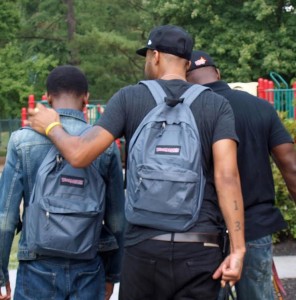
The program of the homes is designed to be flexible enough to meet every aspect of the youngsters day to day life, always with any eye toward the future and a plan of smooth transition either back to his own home or toward more full independence within the community. The Boys’ Home program is interested in three interrelated services:

  1. The development of maturity and responsibility of each boy;
  2. Family counseling; and
  3. Follow-up services to former residents and their families

With the assistance of the referring agent, be it the Juvenile Court Probation Officer, the Department of Social Services Social worker, or the Pupil Services Worker, a planned program is established for each youngster prior to his entering into the home, again considering the length of time this program must be in effect before his release. A program as set up thus far has emphasized a relatively short-term stay in the home, averaging six months to nine months, with a maximum of one year.

The Boys’ Home approach is aimed at developing individual responsibility. The youngster will have duties and assignments as appropriate in the development of self-initiative and self respect. The Boys’ Home will involve to greater of lesser degrees every social service agency and resource within the community that has offered its services as part of its total responsibility for youngsters…

The most dynamic and important part of the Boys’ Home program involves the development of a significant and meaningful relationship between the counselors and the boys themselves.

“These boys are good boys. In most cases all they need is to know that someone loves them and cares what happens to them.” -Mrs. Gipe, Former Housemother

Mrs. Gipe continued, saying “To be awakened in the morning or just to sit on the bed and talk with them for a few minutes, usually gets them up. but once in a while we get a sleepy head that nothing short of a glass of water will work. I might say that after one experience of getting water in their faces, I do not usually have any more trouble getting them up. Surprisingly, they do not get too upset about it. Of course, they know that this could happen. Sometimes I think that they just try me to see if I will really do it”…

Normally one would not think of the home environment as being part of the program. We would ordinarily think of it as being part of our overall concept, but without the need for planning a home atmosphere. Not that we must program the homelike atmosphere but maintenance of our integrity about it being a home atmosphere is often challenged, not only by critics who would rather see a stockade-like structure, but also by the boys who quite often don’t know how to react to the relative tolerance and freedom of the home situation. The reactions by some of the boys is an overindulgence because of the relative tolerance. The reaction of the others used to rigid and restrictive living conditions really puts us on our mettle in trying to maintain the “home.”

Those so unused to what we might call a normal home setting where there is a lot of give and take and opportunity for making mistakes and taking responsibility, do engage in testing our home to see what it’s all about. The counselors are quite involved in helping the youngsters to redefine themselves with regard to our home situation and reduce their confusion. It would be very easy for us as a staff to fall into the pit of reacting to these testing situations by increasing tenfold our rules and regulations, which would in fact move us closer to being an institutional setting rather than a home setting. We have always emphasized with the boys from the very first day and repeatedly throughout their stay, that this home of ours is just that, and that we have no bars, no locks, and if they were of a mind to get up and walk out, we will not call the police or otherwise detain them. Our emphasis is on wanting to make them feel at home so that they do not have to have desires to leave. If a young man decides to “blow up” and leave the home, we are more inclined to reduce his anger and high-pitched feelings by discussion of what the home has meant to him and what he has meant to us. This has arisen on occasion, particularly when a youngster nears release. Quite frankly this has been effective and we have avoided attempts by the boys, at least subconsciously, to have us put bars around them…

The development of an identity with the boys home by each of the youngsters as a place for them to call their own has been quite significant in this regard. Each boy knows that he could walk out at any time and would not be physically withheld or “collared” by one of the counselors, but he also knows that they will give him time and an ear so that he can express himself about whatever he feels is important at the moment…

Some observers feel quite concerned that the home does not have a rulebook for each youngster to look at and read and understand, or a “sign in” and “sign out” sheet so that we will know every moment where every youngster is. If we are to maintain a homelike atmosphere then we cannot get in the business of developing institutional mechanisms… It is with the judges consent that he be placed in the home, in the community…
Finding a forever family

Untitled

Family isn’t always blood. It’s the people in your life who want you in theirs. The ones who accept you for who you are. The ones who would do anything to see you smile, and who love you no matter what.
– Unknown

One of the dreams of many foster youth is simple, to be connected with others who will care about them; not just right now but a forever family who is also there down the line when they make the scary transition into adulthood at the young age of 21. When many youth emancipate from foster care once they turn 21, they are forced to make decisions and choices without the safety net of a family standing behind them that many of us had at the same age, and the consequences if they head in the wrong direction are much greater. Think about when you were 21 and had a question about some of the scary things about being an adult such as how much your electric bill should be, guidance on how to shop for your first apartment or a shoulder to cry on when you got into your first car accident. Most of us had an adult in our corner to support us when things got rough.

For one of our youth, she has found a forever family in her former foster mother. Lashina entered our Family Ties Therapeutic Foster Care Program as a teen and entered the foster home of Ms. Joyner the summer before she aged out of foster care. Although she was only in her home for a short time, the bond between Lashina and Ms. Joyner was immediate and when she left Ms. Joyner’s home at the age of 21, Lashina knew that if things got rough, she would have Ms. Joyner to turn to. In Ms. Joyner, Lashina had found a forever family. After staying with friends for a few months, Lashina found herself in a bad situation with nowhere to turn and called Ms. Joyner for advice. Ms. Joyner’s advice to Lashina was to come home, so she did. Today, Lashina continues to reside with Ms. Joyner as she gets back on her feet and figures out what she plans to do with her future. For Lashina and Ms. Joyner, the bond they formed did not end when Lashina turned 21; they are now and forever will be a family.

Are you thinking about being a foster parent?
Click here to learn more!

The concept of the Boys’ Home

In March 1969 Rex Smith, one of the original founders of Hearts & Homes for Youth, prepared a report called “The House That People Built: Anatomy of a Group Home in Suburbia.” The subject of the report was the Boys’ Home of Montgomery County, which is now known as Hearts & Homes for Youth. Here are some excerpts from the report.

Boys (3)Boys’ Home Concept

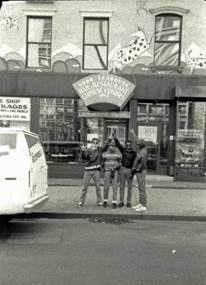
The concept of the Boys’ Home involves an understanding that there are youths in the community who are in need of professional guidance and supervision but for various reasons cannot be worked with in their home. Before Boys’ Home there was no alternative program to a training school commitment or an ill-advised placement on probation. It makes good sense that if we are to treat the behavior problems of these troubled youth we must treat them in their entirety. This means working with the youngsters’ family, school, and community – a task that cannot be accomplished if the young person does not reside within the community itself.

The Boys’ Home is interested in working with youth and family, toward a better understanding, acceptance, and respect for the other. The concept itself, that of a small group residence of eight to ten youngsters, is not to be aborted. The integrity of maintenance of the small setting in a homelike atmosphere is an ultimate concern. The group home for these youngsters is not conceived of as being a high-powered psychiatric facility. Youngsters who are seriously disturbed and in need of intensive psychiatric treatment would not be admitted to the Home. Although we realize the nature of these problems and the need for a residential treatment center, the relative freedom of taking responsibility for oneself in a group home is not conducive to these children. The home will have youngsters with particular behavior problems resulting in difficulties in the home and in the school, perhaps even the community. For the purposes of staff training, provision for psychiatric consultation is made.

The group home cannot satisfy all levels of behavior disturbance for all youngsters. The community must be aware that in addition to group homes it must provide a variety of other services to meet the needs of many youngsters who cannot profit from the group home setting. The concept involves what has been termed by professionals as the “therapeutic milieu,” which means that by having to deal with others in his peer group from similar backgrounds and with similar problems, the youngster learns to deal more effectively with his own personal concerns. In addition, the youngster learns to deal more effectively with a compassionate and stable staff while working out his problems, which often result in a heightened level of anxiety and perhaps even “acting out” in the home.

The nature of the Boys’ Home itself allows for a high degree of tolerance for this type of behavior and a greater degree of understanding on a professional level than does ones own home where such behavior can be disrupting to parents and other children.